



SAP Business One Cloud for Startups: Why the Starter Package Is a Strategic Growth Tool
Startups run on momentum. You have to move fast, keep things lean, and watch every budget. The systems you set up early can make or break your growth. But here’s the problem: too many young companies end up juggling scattered spreadsheets, outdated tools for sales, manual inventory checks, and reports that arrive too late to matter. It’s chaotic, and it slows you down.
That’s where SAP Business One Cloud steps in. It’s more than just another ERP system—think of it as a growth engine built for startups and small businesses. With the Starter Package, even early-stage teams can afford a system that keeps everything connected and organized, without breaking the bank.
In this article, we’ll dig into why SAP Business One Cloud isn’t just software—it’s the backbone you need to build your company for the long haul.
The Startup Challenge: Growth Without Structure
Startups typically begin with lightweight tools:- Excel for financial tracking
- Standalone CRM systems
- Manual purchasing processes
- Basic inventory tools
- Separate accounting software
- Data duplication across systems
- Inconsistent reporting
- Lack of real-time financial visibility
- Manual reconciliation errors
- Limited scalability
What Is SAP Business One Cloud?
SAP Business One Cloud brings SAP’s trusted ERP tools to small and midsize businesses, but without all the hardware headaches. Everything runs in a secure, certified data center—usually on Microsoft Azure—so you just log in over the internet and you’re good to go, no matter where you are. For startups, this setup really stands out for three reasons: you skip the big server costs, you know exactly what you’ll pay each month, and when your business takes off, scaling up is fast and easy.Starter Package and Its Popularity
Even if your team is just getting started, the Starter Package makes all this accessible. It’s designed for startups and small companies with up to five users, giving you all the essential ERP features you need to run your business, but without any of the extra baggage.Key Characteristics of the Starter Package:
- Ideal for 1–5 users
- Full integration across finance, sales, and logistics
- Mobile access capabilities
- Cloud hosting options
- Rapid deployment model
Why SAP Business One Cloud Is a Strategic Tool — Not Just Software
-
Financial Transparency from Day One
- General ledger
- Accounts receivable and payable
- Cost accounting
- Bank reconciliation
- Financial reporting
- Revenue trends
- Gross margin
- Operating expenses
- Outstanding receivables
-
Scalability Without System Replacement
- Costly data migration
- Operational disruption
- Employee retraining
- Implementation delays
- Additional users can be added
- License types can be upgraded
- New modules can be activated
- Multi-company structures can be implemented
-
Reduced IT Burden
- Hosting is managed professionally
- System updates are automatic
- Security patches are handled centrally
- Data backups are performed regularly
- Firewall and anti-malware protection are included
-
Rapid Deployment for Fast-Moving Startups
- Preconfigured charts of accounts
- Standardized business processes
- Role-based dashboards
- Industry best practices
-
Integrated Processes Eliminate Data Silos
- A sales order automatically updates inventory
- Delivery impacts logistics
- Invoicing updates accounting
- Payment affects cash flow reports
Why Investors Appreciate Structured ERP Systems
Professional ERP implementation enhances credibility. When startups use SAP Business One Cloud, they demonstrate:- Financial control
- Operational maturity
- Scalable infrastructure
- Reliable reporting
SAP Business One Cloud and Azure: Enterprise Infrastructure for Startups
When hosted on Microsoft Azure, SAP Business One Cloud benefits from:- High availability architecture
- Redundant data storage
- Secure global access
- Compliance standards
- Disaster recovery capabilities
Cost Predictability: Subscription vs. Heavy Upfront Investment
Traditional ERP implementations require:- Server hardware
- Database licenses
- IT staffing
- Maintenance contracts
- Infrastructure upgrades
- No major upfront capital expenditure
- Transparent budgeting
- Flexible scaling
- Reduced financial risk
Functional Depth Even in the Cloud
Despite being accessible and affordable, SAP B1 Cloud provides extensive capabilities:Finance & Accounting
Complete financial management in one integrated environment.Sales & CRM
From quotation to invoice, fully connected processes.Purchasing
Automated procurement workflows and vendor management.Inventory Management
Real-time stock visibility and warehouse control.Reporting & Analytics
Interactive dashboards and data-driven insights. The Starter Package ensures that even small teams operate with enterprise-grade structure.Multi-Subsidiary Growth Potential
If a startup expands internationally or creates separate business units, SAP Business One Cloud can support:- Multi-company management
- Intercompany transactions
- Consolidated financial reporting
- Global browser-based access
Addressing Common Startup Concerns
“Is ERP too complex for a small team?”
The Starter Package is designed for simplicity. Role-based access ensures users only see what they need.“What if we grow beyond five users?”
The system can be upgraded seamlessly. There is no need to switch platforms.“What if internet connectivity fails?”
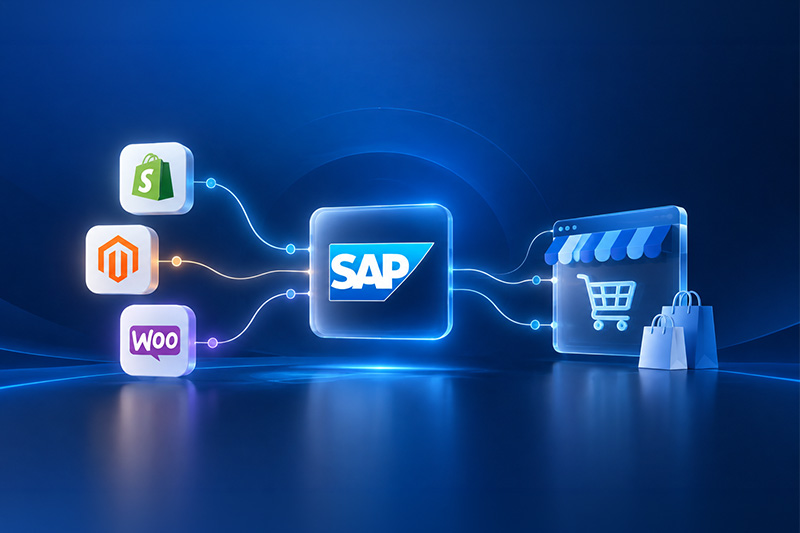
Cloud hosting includes backup and redundancy mechanisms. Temporary connectivity issues do not erase data or compromise integrity.“Can we integrate with e-commerce platforms?”
Yes. SAP Business One Cloud integrates with platforms like Shopify and Magento through certified connectors and APIs.Competitive Advantage Through Operational Discipline
Startups often focus on product innovation and marketing—but operational structure is equally important. Companies that implement structured ERP early typically:- Close financial periods faster
- Reduce operational errors
- Improve cash flow management
- Scale teams efficiently
- Make better strategic decisions
Why SAP Business One Cloud Is a Long-Term Growth Strategy
The Starter Package is not merely entry-level ERP access. It represents:- A structured foundation
- Scalable architecture
- Financial clarity
- Reduced IT complexity
- Enterprise-grade infrastructure
- Strategic cost management
Final Thoughts: A Smart Investment in Structured Growth
In the startup ecosystem, agility is essential—but so is structure. Companies that grow without integrated systems often face painful restructuring later. SAP Business One Cloud provides startups with:- Real-time control
- Integrated business processes
- Cloud-based flexibility
- Predictable costs
- Long-term scalability







 Applicable for Package
 Optional